- More Than Teeth
- Posts
- Is Caffeine Sabotaging Your Sleep and Health?
Is Caffeine Sabotaging Your Sleep and Health?
Where Dentistry Meets Whole-Body Health Michael Bennett, DDS, PhD & Cathy Bennett, MS, NBCHWC
In partnership with

This is More Than Teeth. The new sletter that helps dental sleep professionals get 1% better every week.
Are You Ready to Climatize?

Climatize is an investment platform focused on renewable energy projects across America.
You can explore vetted clean energy offerings, with past projects including solar on farms in Tennessee, grid-scale battery storage in New York, and EV chargers in California.
Each project is reviewed for transparency and offers people access to fund development and construction loans for renewable energy in local communities.
As of November 2025, more than $13.2 million has been invested through the platform across 28 renewable energy projects. To date, over $3.6 million has already been returned to our growing investor base. Returns are not guaranteed, and past performance does not predict future results.
Check out Climatize to explore clean energy projects raising capital. Minimum investments start with as little as $10.
Climatize is an SEC-registered & FINRA member funding portal. Crowdfunding carries risk, including loss.

Good morning.
Caffeine is the most widely used stimulant on the planet, and in dentistry, it’s part of our daily ritual. But what if the very thing our patients reach for to feel better is quietly sabotaging their sleep, increasing their bruxism, and stalling their healing?
This week, we zoom in on a powerful but often overlooked clinical opportunity:
Caffeine timing and sleep disruption.
The goal isn’t to demonize coffee or energy drinks, nor to judge lifestyle habits. It’s to equip you, as a front-line oral-systemic health advocate, with practical questions and evidence-based insight to uncover what might be hiding behind your patient’s fatigue, jaw pain, or stalled recovery.
In Today’s Edition:
This week’s issue helps you reframe caffeine as a powerful diagnostic and coaching opportunity, not just a lifestyle choice. Inside, you’ll find clinical tips, screening prompts, and practical strategies to help patients sleep better, grind less, and heal more predictably.
5-minute read👇
Clinical Corner 🥼
Use this issue to reframe caffeine as a patient-centered health opportunity, not a judgment.
🔑 Key Takeaways:
Caffeine’s half-life (3–7 hours) can delay sleep onset, fragment deep sleep, and worsen fatigue and bruxism, especially when consumed after 12–2 p.m.
Interrupted sleep disrupts the body's natural detox process, hormone regulation, and healing. key processes for recovery from TMJ pain, inflammation, and oral surgeries.
Asking patients “What time was your last dose of caffeine yesterday?” can yield valuable insight into poor sleep, persistent fatigue, and OSA risk factors.
Reassess bruxism, fatigue, and healing 2–4 weeks after a patient begins a caffeine cutoff, nasal routine, and consistent wind-down strategy.
Why It Matters: Caffeine, Bruxism & the Brain
Caffeine is often the go-to fix for patients struggling with daytime fatigue, but it may be fueling the very sleep disruptions that cause their symptoms. As stimulant use rises to offset tiredness, it masks deeper issues such as:
Sleep-related breathing disorders (SRBD)
Poor sleep hygiene
Oral inflammation and impaired recovery
In one randomized crossover study, caffeine taken even 6 hours before bedtime significantly reduced total sleep time and sleep efficiency (Drake et al., 2013). Sleep architecture disruption, particularly decreased slow-wave sleep, reduces the brain’s glymphatic clearance and elevates cortisol, thereby undermining the natural healing responses essential for orofacial recovery.
Bruxism, which is often exacerbated by sympathetic overdrive and micro-arousals, is also linked to sleep fragmentation and hypoxia-triggered survival reflexes, as detailed in Dr. Bennett’s recent sleep-appliance training presentations.
How Much Caffeine Are You Really Drinking?
Comparing Popular Energy Drinks, Coffee & Tea
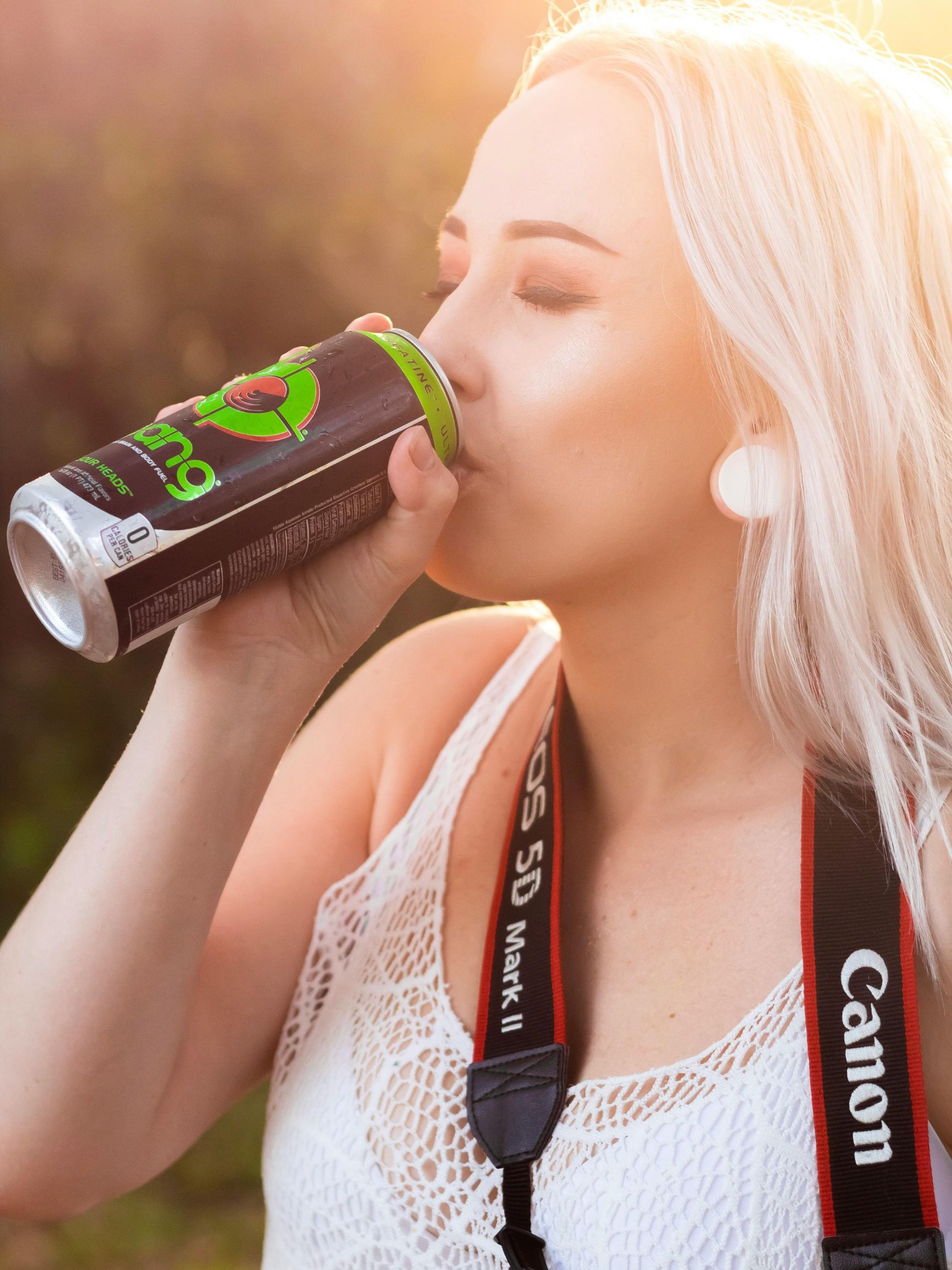
Many patients underestimate their caffeine intake — especially from energy drinks, cold brews, and "healthy" teas. Here's a quick reference you can include in your handouts, newsletters, or intake forms.
Drink | Caffeine (mg) | Notes |
|---|---|---|
Brewed Coffee (8 oz) | 95–120 mg | Varies by roast and method |
Cold Brew (12 oz) | 150–250 mg | Often double the caffeine of hot brew |
Starbucks Grande (16 oz) | ~310 mg | Esp dark roast or espresso drinks |
Black Tea (8 oz) | 40–70 mg | Often assumed to be “low caffeine.” |
Green Tea (8 oz) | 25–45 mg | Lower caffeine, but still stimulating |
Red Bull (8.4 oz) | 80 mg | Small but concentrated |
Celsius (12 oz) | 200 mg | Marketed as a “fitness” drink |
Bang Energy (16 oz) | 300 mg | Max legal limit per FDA |
Monster Energy (16 oz) | 160 mg | Often combined with sugar & taurine |
Pre-workout powders (1 scoop) | 150–400+ mg | Easy to overdose without tracking |
Clinical Script: 20-Second Caffeine Check-in
“I ask all my patients about their caffeine habits because it can affect sleep, bruxism, and healing, even dental work healing. About how many cups do you drink a day? And what time is your last dose, coffee, energy drink, tea, or pre-workout?”
This simple, non-judgmental question helps patients feel safe, seen, and coached, rather than lectured. Combine this with an Epworth or STOP-BANG screener if fatigue or bruxism is present.
Add This to Your Medical History Form:
Caffeine intake (cups per day):
Time of last dose (typical day):
Energy drinks or pre-workout? Y/N
Set a caffeine cutoff time (ideally before 12–2 p.m.).
Pair with a nasal hygiene routine (saline rinse, breath training).
Create a wind-down ritual: No screens for 1 hour before bed, followed by a 10-minute meditation, a warm bath, or gratitude journaling.
Reassess energy, sleep, or jaw tension in 2–4 weeks.
📊 Research Spotlight
1. Caffeine and Sleep Disruption
“Caffeine consumed 6 hours before bedtime has significant disruptive effects on sleep, including reductions in sleep efficiency and total sleep time.”
— Drake et al., 2013. J Clin Sleep Med.
2. Bruxism, Hypoxia, and Sympathetic Drive
“Sleep bruxism may be a survival response triggered by hypoxia or sleep fragmentation.”
— Sjöholm et al., 2000. Arch Oral Biol
3. Sleep Loss Impairs Healing
“Fragmented sleep impairs tissue recovery and immune function. Athletes with better sleep experience faster healing and fewer injuries.”
— Mah et al., 2011; Dattilo et al., 2011; Gumustekin et al., 2004
Monday Morning Moves
Add “Caffeine Cutoff” education to your hygiene or wellness visit.
Include caffeine timing questions in intake forms.
Use bruxism and fatigue as springboards into sleep-aware dentistry.
Re-evaluate bruxism splint patients for underlying airway or stimulant-driven sleep disruption.
💬 Final Word:
Want to share this edition with your team or patients?
Download our printable handout: “Caffeine, Sleep & Your Smile.”
Coach Cathy’s Corner
“But I Need My Pre-workout, Energy Drink …”
Rewriting the Story We Tell Ourselves About Caffeine & Fatigue
As a National Board–Certified Health & Wellness Coach, I’ve heard it dozens of times:
What if we flipped the script?
What if the fatigue is because of the caffeinated drinks?
Here’s the pattern I see in so many patients (and let’s be honest, some of us clinicians too):
Poor sleep → fatigue
Fatigue → more caffeine
More caffeine → worse sleep
Repeat cycle.
We call this the Caffeine-Fatigue Spiral, and for many people, it’s not a weakness or a lack of willpower. It’s a survival adaptation that made sense when they didn’t know what was causing their fatigue.
Small Shift, Big Impact
Rather than demanding they “quit caffeine,” we coach toward experiments, not ultimatums:
“Would you be willing to try a caffeine cutoff at 12 or 2 p.m. just for a week?”
"How would your body feel if it could completely relax?"
This opens the door to empowered change, instead of shame or resistance.
🧠 Coach Tip for the Dental Team:
When your patient mentions fatigue, bruxism, or high stress, try this script:
“One thing we often find is that caffeine, especially after noon, can sneakily steal deep sleep. Would you be open to tracking your sleep and cutting off caffeine a bit earlier, just as an experiment?”
Give them permission to test, not to be perfect.
Something Sweet
🍭Stuff so sweet you might get a cavity…
CE Opportunities / Events
Event | Dates | Location | Link | Discount Code |
|---|---|---|---|---|
AADSM Mastery Program | Ongoing dates (check website) | University of Utah & Onli | Click HERE | |
North American Dental Sleep Medicine Symposium | February 20-21, 2026 | Clearwater, Florida | Click HERE | MTT200 |
Miscellaneous….
Every patient you help breathe better, sleep deeper, and feel stronger is a life changed for the better. Keep asking the deeper questions. Keep connecting the dots. You're not just treating teeth, you’re transforming health.
Thanks for being part of the movement.
Until next week,
Dr. Michael & Cathy Bennett
More Than Teeth | A Mission for Generational Health
Reply